
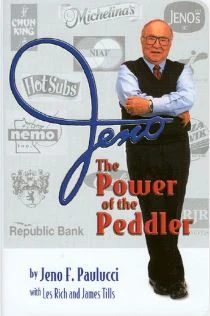
Jeno Paulucci was born in 1918 in Hibbing, Minnesota, to Italian immigrant parents. Growing up in a working-class environment taught him early the value of hard work and persistence. His parents ran a small grocery store that gave him early exposure to both its challenges and rewards as an entrepreneur; from an early age onward, he spent his days stacking shelves, helping customers, and observing his father's entrepreneurial zeal, which would influence his career later on.
As a young man during the Great Depression, Jeno witnessed first-hand the struggles of working families and developed an intense drive to create something more significant. With an instinctual ability to recognize opportunities and an incredible work ethic, he eventually discovered an opening in food distribution where there was an increasing need for convenient ready-to-eat meals; this inspired him to launch Chun King as an accessible brand that provided canned and frozen Chinese cuisine to mainstream American households at a time when such cuisine wasn't widely available.
Jeno built Chun King from scratch using innovative marketing strategies, quickly making his idea a household name. Part of what attracted him to Florida (Sanford in particular) was its reputation as the "Celery Capital of the World." Known for its celery farms, Jeno decided this was the perfect place to purchase the celery needed as a low-cost additive to his Chun King product line. The low cost of celery allowed Jeno to keep costs down while still maintaining the quality & flavor he desired. His innovative approach allowed him to mass-produce Chinese-style meals that were simple and quick to prepare, making them accessible to a broader audience. Jeno was on the right track, and by the 1960s, he had built the brand into a multi-million dollar business. Jeno sold the company to R.J. Reynolds for 63 million dollars a few years later. After capitalizing on the success of Chun King, Jeno decided to move into the frozen pizza business with Jeno's Pizza Rolls. He created a bite-sized snack, quickly gaining popularity and carrying in most grocery store freezers. The company was eventually sold to Pillsbury for a considerable amount of money.
Jeno found great success with many of his business ventures; however, Luigino's Inc. was one of his more ambitious failed endeavors. Jeno had hoped to replicate his earlier success with Chun King and Jeno's Pizza Rolls; however, it was not. From the beginning, the company had operational challenges and stiff competition. Even Jeno's impressive marketing skills could not reinvigorate the company. The company eventually folded as it could not maintain profitability.
Jeno displayed unwavering resilience throughout some of his business ventures despite experiencing setbacks. Even when a venture failed, Jeno kept going with a positive attitude and the resilience to build another company.
After success in the food industry, Jeno settled in Sanford, Florida, where he established an extravagant estate. This mid-century modern dwelling was designed with both comfort and functionality in mind. With its large living spaces, elegant architectural details, and beautifully landscaped property, his home served both his family and as a venue to host influential guests. One such guest was President Lyndon Johnson. The house was built as a place to hold meetings and to live as it had two front doors, one leading to his office and the other to the central part of the home. Jeno also saw the potential in Downtown Sanford and helped revitalize several commercial properties there, bringing in new business opportunities.
Jeno maintained an active involvement in Heathrow Country Club, even from Sanford. He maintained close ties to his friends and colleagues there. He frequently held meetings there, had lunch with golfers, and hosted many events. He was also passionate about mentoring young entrepreneurs and giving them business advice when needed.
Jeno's wife, Lois, played an invaluable role in helping Jeno grow the business and maintain its legacy. The family also managed his business ventures, ensuring the legacy would live on for many years.
As Jeno's business empire expanded, so did his commitment to philanthropy. He donated millions to charitable causes such as scholarships, community programs, and healthcare initiatives, including those in his hometown of Hibbing, Minnesota, and Florida.
Jeno's death in 2011 ended an incredible era of success, innovation, and hard work. As a visionary who used all of his innate skills to improve the area and the world, Jeno's contributions will continue to inspire many generations.